
China's Top Generative AI Patent Holders
The rapid emergence of Large Language Models (LLMs) has reshaped perceptions of leadership in artificial intelligence. Patent data, however, reveals a broader picture of how generative AI evolved globally during the decade preceding the recent LLM boom.
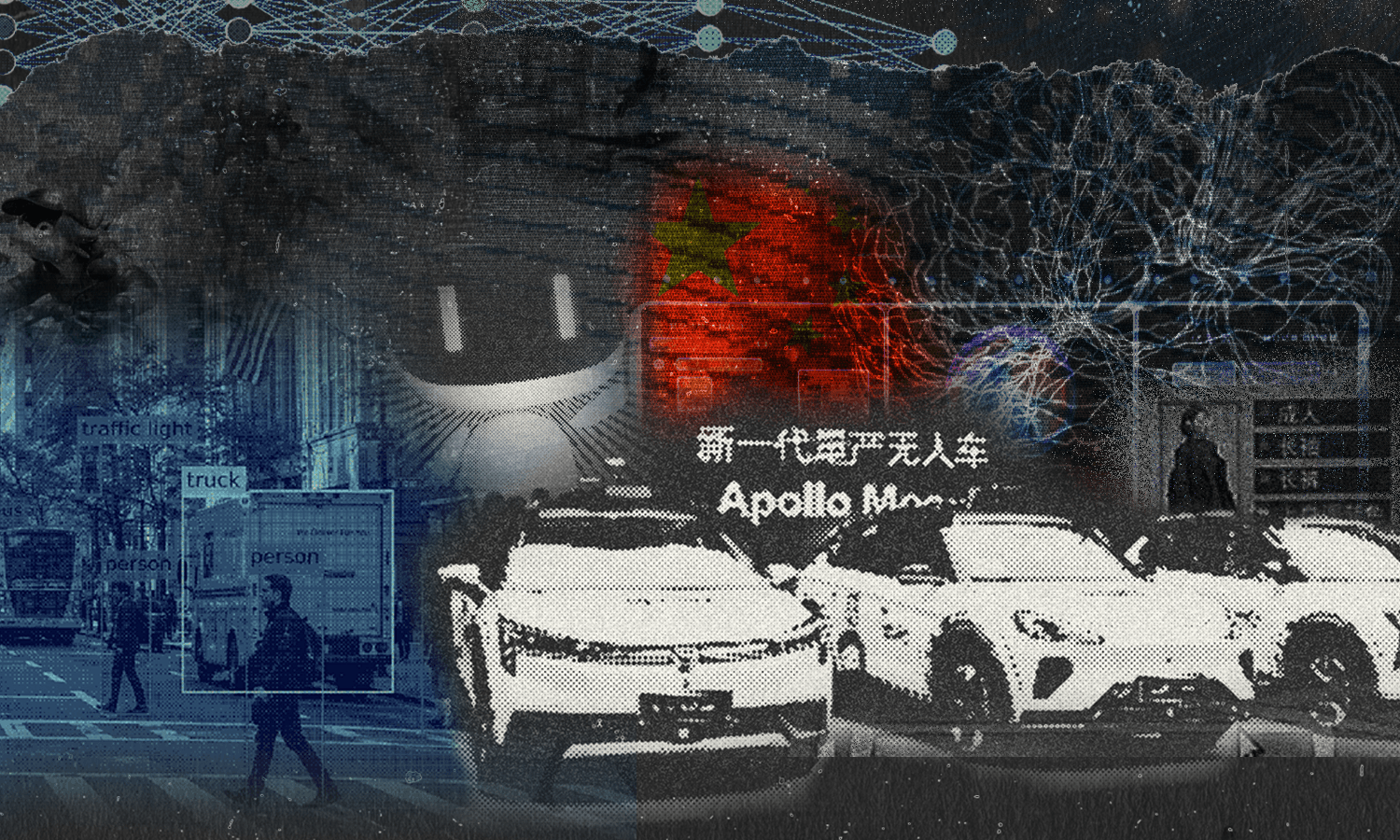

he rapid emergence of Large Language Models (LLMs) has reshaped perceptions of leadership in artificial intelligence. Because many of the most visible frontier models—including ChatGPT, Claude, Gemini, and Llama—originated in the United States, discussions about generative AI often focus on advances in large-scale language systems and the organizations building them. Patent data, however, reveals a broader picture of how generative AI evolved globally during the decade preceding the recent LLM boom.
Long before Chinese companies released public-facing chatbot products, they were accumulating substantial patent portfolios across a wide range of generative AI technologies. According to the World Intellectual Property Organization's 2024 Patent Landscape Report: Generative Artificial Intelligence, Chinese companies and research institutions emerged as some of the world's most prolific owners of published generative AI patent families between 2014 and 2023. These patents span image generation, speech synthesis, computer vision, recommendation systems, scientific modeling, digital-human technologies, and other applications that extend well beyond large language models.
The organizations profiled below represent the leading China-based owners of published generative AI patent families during that period. While patent volume is not a direct measure of model quality, commercial success, computing capacity, or leadership in frontier AI systems, it provides a useful window into where organizations invested research and development resources, how they approached commercialization, and which institutions played the largest role in shaping China's generative AI ecosystem.
Data Scope and Currency
The figures cited throughout this brief are drawn from the World Intellectual Property Organization's (WIPO) Patent Landscape Report: Generative Artificial Intelligence (2024). The report evaluates published generative AI patent families worldwide from 2014 through December 2023.
For additional information regarding methodology, patent-family counting, publication lags, and classification techniques, see the Methodology & Data Scope section below.

China's Leading Generative AI Patent Holders, 2014–2023
Sources: Patent Landscape Report: Generative Artificial Intelligence, WIPO (2024), WireScreen patent data, Google Patents
The companies on this list are all tracked on the WireScreen platform, which has profiles on more than 20 million companies, including both stock-exchange-listed and privately held firms.

1. Tencent Holdings
- Region: Guangdong Province, China
- Published GenAI Patent Families: 2,074
- Company Description: Tencent is one of China's largest technology companies. It operates popular online platforms, like WeChat, QQ, Tencent Cloud, and it has a global portfolio of gaming, digital media, and technology businesses.
- Patent Summary: Tencent is a global leader in several major generative AI categories, including decoder-based large language models. Many of the company's patents focus on generating and interpreting text, images, audio, and video across social media, gaming, cloud computing, and enterprise software. The portfolio underpins Tencent's broader AI strategy, including the Hunyuan family of foundation models and the integration of generative AI capabilities across its consumer and enterprise platforms.

2. Ping An Insurance Group
- Region: Guangdong Province, China
- Published GenAI Patent Families: 1,564
- Company Description: Founded in 1988, Ping An is one of China's largest financial-services firms, with operations spanning insurance, banking, asset management, healthcare, and financial technology.
- Patent Summary: Ping An's patents include applications of large language models to insurance workflows, including a patented customer-service system built on the ChatGLM architecture, as well as methods for claims processing, underwriting support, and digital-human technologies.

3. Baidu
- Region: Beijing, China
- Published GenAI Patent Families: 1,234
- Company Description: Baidu is a leading Chinese technology company best known for operating the country’s largest search engine. It also has a growing portfolio of artificial-intelligence and cloud-computing businesses.
- Patent Summary: Many of Baidu’s generative AI patents for NLP, deep-learning architectures, and foundation-model development support capabilities underlying ERNIE. Baidu also holds patents on methods to support Apollo, Baidu’s autonomous driving platform.

4. Chinese Academy of Sciences (CAS)
- Region: Beijing, China
- Published GenAI Patent Families: 607
- Company Description: The Chinese Academy of Sciences (CAS) is China's premier state-backed scientific research organization and oversees a broad network of research institutes across disciplines including physics, computing, materials science, aerospace, and artificial intelligence.
- Patent Summary: CAS maintains an extensive portfolio across data augmentation (e.g. medical scans, training images for crop diseases), image and video generation (medical imaging synthesis, face aging) image enhancement (underwater image clarity, defogging), text generation, scientific and engineering generation (music generation, crystal structure design, geophysical data synthesis), LLMs, and deepfake detection. CAS has several patents co-filed with other entities, such as model training with Huawei, and a dual-branch vision-language model with Matrix Time Robotics.

5. Alibaba Group
- Region: Zhejiang Province, China
- Published GenAI Patent Families: 571
- Company Description: Alibaba Group is one of China's largest technology companies, operating major e-commerce, logistics, cloud-computing, digital-media, and financial-technology businesses.
- Patent Summary: Alibaba's portfolio spans a wide range of technologies including GANs, seq2seq models, and large-scale transformers. These patents have applications across the company’s many subsidiaries, such as product description generation for Taobao and Tmall e-commerce, identifying fraud cases across Alibaba-affiliated platforms including e-commerce and financial-technology services.

6. ByteDance
- Region: Beijing, China
- Published GenAI Patent Families: 418
- Company Description: ByteDance is a Chinese technology company whose brands and products range from Douyin, TikTok, Toutiao, Lark, and BytePlus.
- Patent Summary: ByteDance's generative AI research focuses on tools for Tiktok and Douyin including filters, avatar generation, video feeds, content moderation, and recommendations. Lemon Inc., an affiliate of Bytedance1, holds patents associated with TikTok and CapCut functionality – such as generating visual effects based on text.

7. BBK Electronics
- Region: Guangdong Province, China
- Published GenAI Patent Families: 377
- Company Description: BBK Electronics (deregistered in April 20232) was a Chinese consumer-electronics company historically associated with smartphone brands including Vivo, Oppo, OnePlus, and Realme, which today operate through distinct corporate structures.
- Patent Summary: BBK's generative AI patent activity focuses primarily on mobile-device applications, computer vision, voice technologies, image generation, and on-device AI optimization.

8. NetEase
- Region: Zhejiang Province, China
- Published GenAI Patent Families: 337
- Company Description: NetEase is a Chinese technology company engaged in online gaming, digital content, education technologies, cloud services, and internet platforms.
- Patent Summary: NetEase's portfolio includes models used for generating game assets, music generation and recommendations for NetEase Cloud Music, NLP models for NetEase Youdao, and technology to support enterprise products such as ClawHive.

9. Huawei
- Region: Guangdong Province, China
- Published GenAI Patent Families: 328
- Company Description: Huawei is one of the world's largest telecommunications equipment and consumer electronics manufacturers. The company has faced significant scrutiny and restrictions from the United States and several allied governments over national security concerns and its ties to the Chinese government, allegations that Huawei has consistently denied.
- Patent Summary: Huawei's generative AI portfolio includes network optimization, computer vision, AI-chip architecture, neural-processing systems, and enterprise-focused foundation-model technologies, including work associated with its Pangu model family. Huawei’s patents underlie products such as ModelArts, a platform for AI model development, and cameras in Huawei phones.

10. Tsinghua University
- Region: Beijing, China
- Published GenAI Patent Families: 321
- Company Description: Tsinghua University is one of China's leading public research universities and a major center for scientific and engineering research.
- Patent Summary: Tsinghua's patent portfolio spans memristor-based neural network hardware, optical and diffractive neural networks, reinforcement learning, computer vision, and optimization methods. The patents emphasize applications in medical imaging– such as MRI image reconstruction– improving chip performance in high-speed vision tasks for autonomous driving, and electricity market forecasting.
Methodology & Data Scope Notes
Why Data After 2023 Remains Incomplete
Patent systems around the world generally operate under an approximately 18-month publication delay. As a result, many applications filed in recent years have not yet appeared in public databases. For this reason, WIPO's 2024 Patent Landscape Report: Generative Artificial Intelligence uses 2023 as the most recent year suitable for comprehensive comparative analysis.
Patent-Family Counting
Figures in this report represent published patent families rather than individual patent applications. A patent family groups filings covering the same underlying invention across multiple jurisdictions, preventing inflation that would otherwise occur when organizations file identical inventions in numerous countries.
Generative AI Classification Methodology
Because generative AI lacked a dedicated patent classification framework throughout much of the 2014–2023 period, WIPO employed a multi-stage identification process combining keyword analysis, artificial-intelligence-assisted text extraction, and machine-learning classification techniques to identify patent families specifically related to generative AI technologies.
About WireScreen
WireScreen is a risk-intelligence platform that maps global corporate networks, ownership structures, state affiliations, intellectual-property portfolios, and supply-chain relationships. The platform helps government agencies, investors, corporations, researchers, and compliance professionals identify hidden connections and assess organizational risk in complex global markets.
1https://www.wipo.int/amc/en/domains/decisions/pdf/2023/d2023-3961.pdf
2According to WireScreen data




.png)